What to Look for During an Ice Resurfacer Inspection
Key Components and Safety Checks Every Operator Should Know

Regular inspection is one of the most effective ways to maintain an ice resurfacer, yet it is often treated as a formality rather than a critical operational task. A thorough inspection goes beyond confirming that the machine turns on and moves. It involves understanding how each system behaves, recognizing early warning signs, and documenting findings so that maintenance can be planned instead of rushed.
An effective inspection routine protects against unexpected downtime, improves safety, and extends the lifespan of the machine. Facilities that conduct consistent inspections often identify problems weeks or months before failure occurs. Those that do not may experience sudden breakdowns that disrupt schedules and increase repair costs.
The most important principle of inspection is consistency. Inspections should follow the same process every time so that changes are noticeable. A structured approach ensures that no system is overlooked and that findings can be compared over time. While inspections can vary slightly depending on machine type and age, certain elements apply universally.
Visual inspection is the foundation. Before starting the machine, operators should walk around it and look for signs of fluid leakage, loose components, or physical damage. Small puddles or damp areas under the resurfacer often indicate developing hydraulic or coolant leaks. These early signs are easy to miss if inspections are rushed. Hoses and fittings should be checked for cracking, abrasion, or swelling, particularly near connection points where stress is highest.
Tires or traction components should be examined next. Uneven wear, low pressure, or visible damage affects machine stability and can translate into inconsistent resurfacing. Proper inflation is especially important, as incorrect pressure changes how the machine tracks and distributes weight across the ice surface. Over time, this influences ice quality and component wear.
Blade inspection is a critical part of any resurfacer check. The blade should be visually examined for nicks, uneven wear, or improper mounting. Even minor blade issues can cause vibration, chatter, or poor cutting performance. Operators should also confirm that blade fasteners are secure and that the blade sits evenly across its mounting surface. Ignoring blade condition often leads operators to compensate through control adjustments, which increases mechanical stress elsewhere.
Once the visual inspection is complete, fluid levels should be checked. Engine oil, hydraulic oil, and any other specified fluids must be within recommended ranges. Low fluid levels may indicate leaks or consumption issues that require attention. Fluid condition matters as well. Discolored or cloudy fluids suggest contamination or degradation and should be reported for further evaluation.
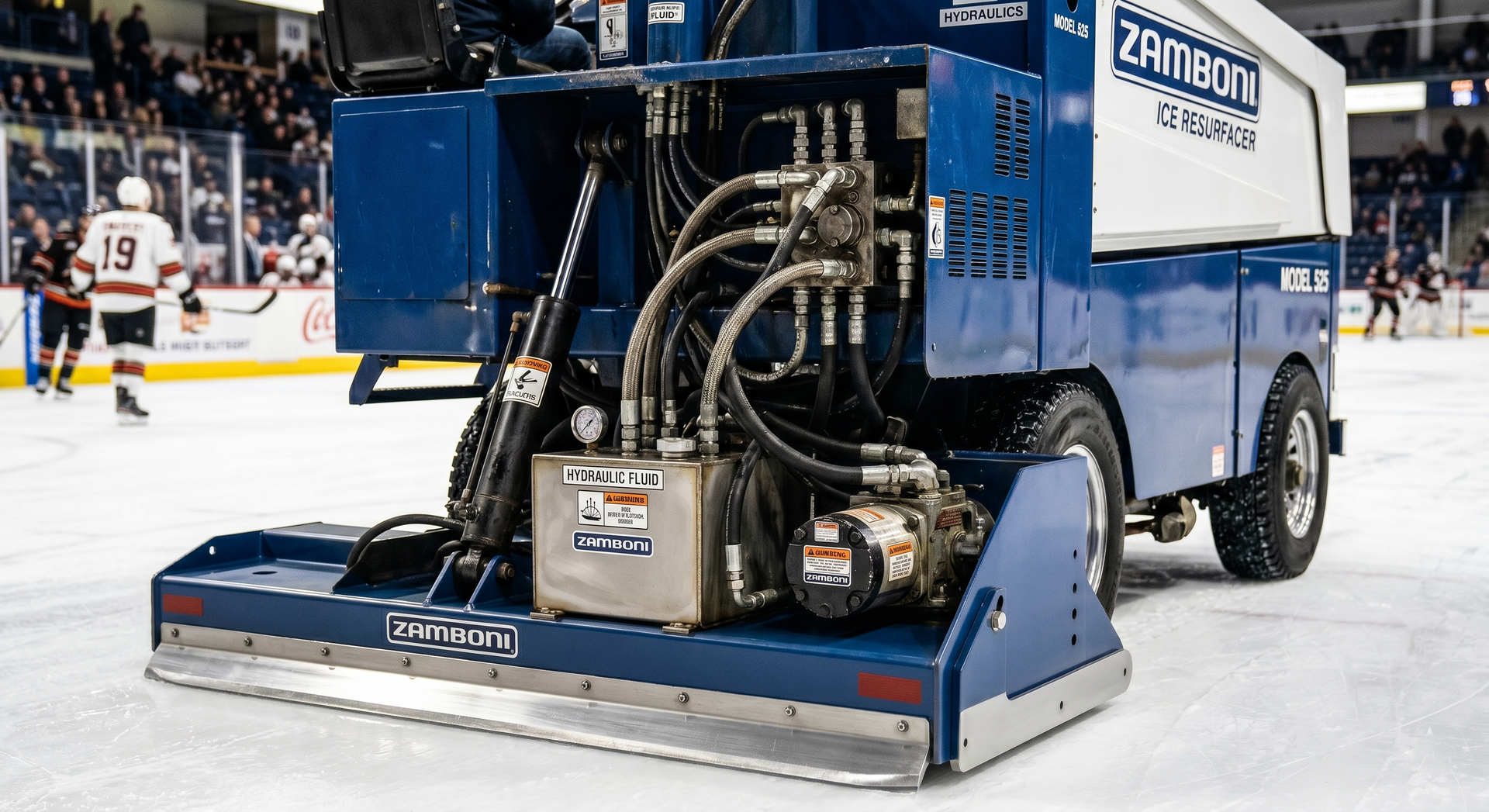
Hydraulic systems deserve particular attention during inspection. In addition to checking hoses and fittings, operators should observe how hydraulic functions respond during operation. Sluggish movement, jerky response, or unusual noises often indicate fluid issues or internal wear. These symptoms rarely appear suddenly; they develop gradually and are best identified through routine observation.
Electrical inspection is increasingly important as resurfacers incorporate more electronic systems. Operators should check that lights, indicators, displays, and safety interlocks function correctly. Wiring should be inspected for signs of wear, corrosion, or loose connections, especially in areas exposed to moisture. Electrical issues often manifest intermittently, making early detection through inspection especially valuable.
Control systems should be tested during inspection. Levers, switches, and pedals should move smoothly and return to neutral positions as intended. Sticking controls or delayed response may indicate mechanical binding or hydraulic issues. Operators should never ignore changes in control feel, as these often precede failures.
Listening is an underappreciated inspection tool. Operators who are familiar with normal machine sounds can detect problems early by noticing changes in noise patterns. Grinding, whining, knocking, or hissing sounds often signal bearing wear, hydraulic leaks, or drivetrain issues. These sounds may be subtle at first, emphasizing the importance of familiarity and attention.
Vibration is another key indicator. Excessive vibration during operation may result from blade imbalance, drivetrain wear, or misalignment. Operators should note when vibration occurs and whether it changes with speed or load. Documenting these observations helps maintenance staff pinpoint causes more efficiently.
Operational inspection includes observing how the machine performs its core functions. Does it track straight? Does it respond consistently to inputs? Does snow collection appear efficient? Does water distribution look even? Deviations from normal performance should be noted, even if they do not prevent operation. Small performance changes often signal underlying issues that will worsen if ignored.
Inspection should also include safety systems. Emergency stops, alarms, and interlocks must function correctly to protect operators and others in the facility. Safety features are sometimes overlooked because they are not used during normal operation, but their reliability is essential. Regular testing ensures they will function when needed.
Documentation is what transforms inspection from a routine task into a management tool. Recording findings creates a history that helps identify trends. For example, repeated notes about minor leaks in the same area suggest a developing problem. Without documentation, these patterns are lost, and issues are treated as isolated events.
Inspection frequency matters. Daily inspections catch immediate issues and prevent unsafe operation. Weekly or periodic inspections allow for deeper evaluation of wear and performance trends. Facilities should adjust inspection depth based on machine age and usage. Older machines benefit from more detailed inspections, as wear accelerates over time.
Training plays a role in inspection effectiveness. Operators must know what to look for and why it matters. Without training, inspections become box-checking exercises rather than meaningful evaluations. Facilities that educate operators on inspection purpose and techniques gain better information and reduce risk.
Inspections also support communication between operators and maintenance staff. Clear, consistent inspection reports help technicians understand what the operator experienced and where to focus diagnostic efforts. This reduces troubleshooting time and prevents unnecessary part replacement.
Environmental conditions should be considered during inspection. Cold temperatures affect fluid behavior and hose flexibility. Humidity increases corrosion risk. Inspections should account for these factors and focus on components most affected by local conditions.
A common mistake is assuming that inspections are redundant if maintenance is scheduled regularly. In reality, inspections and maintenance serve different purposes. Maintenance addresses known needs at planned intervals. Inspections identify emerging issues between those intervals. Both are necessary for reliable operation.
Effective inspection practices reduce downtime not by eliminating wear, but by managing it. Wear is inevitable, but failure is not. Inspections allow facilities to schedule repairs before wear turns into breakdowns.
Over time, consistent inspections build operator confidence. Operators who know their machine well are better equipped to operate it smoothly and report changes accurately. This familiarity improves overall performance and safety.
Ultimately, an ice resurfacer inspection is not about finding problems to fix immediately. It is about understanding machine condition and making informed decisions. Facilities that treat inspection as a core operational process rather than a formality gain better control over maintenance, costs, and reliability.
A well-inspected resurfacer is safer, more predictable, and easier to maintain. By focusing on visual cues, system behavior, sound, vibration, and documentation, facilities can catch issues early and keep resurfacing operations running smoothly throughout the season.
Recent Posts