An ice resurfacer is not like most pieces of facility equipment. It runs in cold conditions, works with water and ice daily, experiences constant vibration, and performs a job that directly impacts your customers. When the resurfacer is running well, most people never think about it. When it fails, everything becomes urgent: ice quality drops, schedules slip, leagues complain, and revenue disappears. That is why a realistic ice resurfacer service schedule is one of the most important operational tools a rink can have.
Many facilities fall into one of two traps. The first is relying only on a manufacturer checklist without adjusting for real usage. The second is pushing service off until something breaks. Both approaches can be expensive over time. The best plan is a layered schedule that combines daily and weekly operator routines with hour-based maintenance, seasonal readiness checks, and deeper annual service. That structure keeps the resurfacer reliable, controls costs, and protects the machine’s lifespan.
The starting point is understanding what “service” means in practical terms. Service is not just an oil change. For an ice resurfacer, service includes inspection, cleaning, lubrication, fluid management, component adjustment, replacement of wear items, and documentation. The goal is to keep the machine operating within normal performance ranges and to identify wear early enough that repairs can be scheduled instead of forced by an emergency.
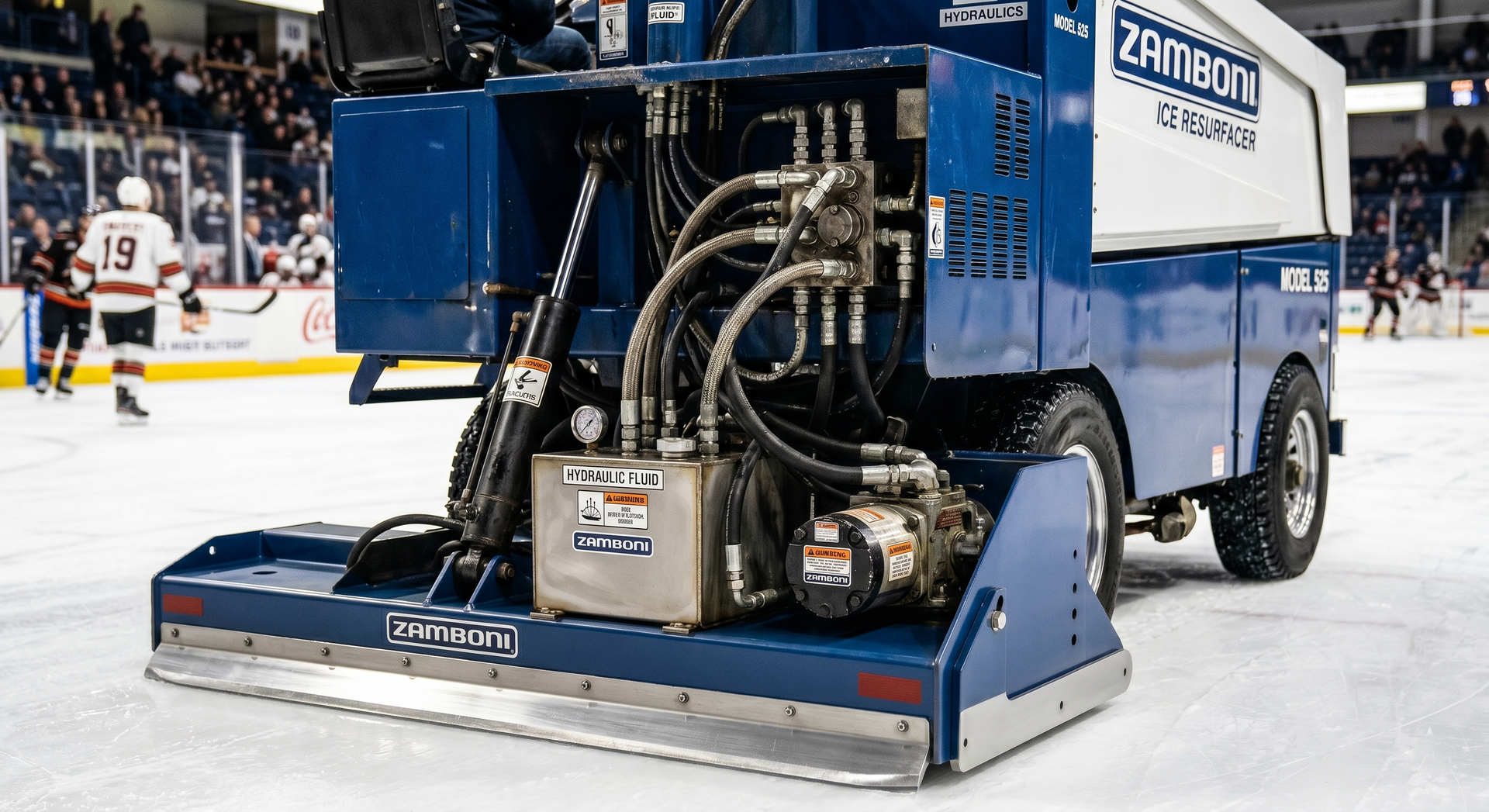
Daily checks are the lowest-cost, highest-value part of the schedule. These should be done before the resurfacer enters the ice surface. Even a quick walk-around can catch problems that would otherwise become major failures. Operators should look for fluid drips under the machine, abnormal residue on hydraulic hoses, loose wiring, damaged lights, and unusual tire wear. Fluid levels matter: engine oil, hydraulic oil, coolant where applicable, and any other fluids specified by the model. Blade condition should be checked, because a dull or damaged blade doesn’t just worsen ice quality. It can create vibration, increase drivetrain load, and cause uneven cutting that leads operators to compensate in ways that put additional stress on the machine. If the resurfacer uses any dashboard indicators or warning lights, operators should confirm normal readings and report changes consistently.
Weekly service routines typically focus on cleanliness and lubrication. The environment around an ice resurfacer is harsh. Snow buildup, ice shavings, and moisture can collect around moving parts. Over time that leads to corrosion, seized pivots, sticky linkages, and premature wear on belts, chains, and bearings. Cleaning the conditioner area, auger zone, and undercarriage is not cosmetic; it is part of mechanical preservation. Lubrication is equally important. Many components fail early because they are under-lubricated or inconsistently lubricated. A weekly routine that covers grease points, chain lubrication if applicable, and inspection of wear surfaces improves reliability and reduces the chance of sudden component seizure.
The next layer is hour-based service. This is where many facilities either over-service or under-service. Calendar-based scheduling, such as “once every month,” can be misleading because usage differs drastically. A rink running a few resurfacings per day is not equal to a tournament facility resurfacing repeatedly all weekend. A practical target for many machines is deeper service every 100 to 150 operating hours, aligned with many manufacturer recommendations for oil and filter intervals and hydraulic inspection. At this interval, filters can be replaced before restriction becomes a problem, fluids can be checked for contamination, belts can be inspected for cracking or glazing, and components can be tightened and adjusted before vibration loosens them further.
A key concept for hour-based servicing is that small delays compound. Dirty oil does not cause immediate failure, but it increases wear with every hour. Contaminated hydraulic fluid gradually damages valves, pumps, and seals. A slightly loose belt may still work, but it slips under load, heats up, and wears faster. When these issues stack up, the machine becomes less efficient and more failure-prone. The facility then experiences “mystery breakdowns” that feel sudden but are actually the final stage of gradual neglect.
Seasonal readiness is another essential part of an ice rink equipment servicing plan. Many rinks have a predictable cycle: heavy fall start-up, mid-winter peak, spring events, and offseason reduction. A preseason readiness check is not the same as routine service. It should include a deeper look at hoses and fittings, electrical connections, brake performance, drivetrain condition, water distribution components, and any system that is likely to fail under high use. During peak season, the resurfacer is often needed multiple times per day. That is the worst time to discover a marginal hydraulic hose or a bearing that is nearing the end of its life. Seasonal readiness service shifts your risk earlier, when you still have time to schedule parts and labor.
Annual service is the deepest level and is where professional technicians can add the most value. Annual servicing is often the best time for full fluid changes rather than top-offs, more comprehensive inspections of hydraulic hoses and lines, deeper drivetrain inspection, and calibration of performance systems. It is also the right time to review the year’s maintenance logs. A facility that tracks what it replaced, when it replaced it, and why it replaced it can make smarter decisions. For example, if a rink is replacing certain belts more frequently than expected, that can signal alignment or tension issues. If hydraulic leaks appear repeatedly in the same area, that may suggest routing or vibration problems.
Machine age should influence service frequency. A newer resurfacer can be extremely reliable, but that reliability depends on establishing good habits early. When machines are new, some facilities become less disciplined because performance feels strong. That is a mistake. The best time to be disciplined is when the machine is young, because consistent maintenance extends life and protects resale value. As the machine ages, inspection frequency often needs to increase. Hoses and seals fatigue, electrical connectors oxidize, and wear rates accelerate. Older machines typically benefit from more frequent inspections and sometimes shorter service intervals.
Usage intensity should also drive scheduling. A community rink resurfacing two to four times per day will likely have different needs than a large facility resurfacing every hour. The only way to know is to track operating hours and build service around that data. If your resurfacer does not have a reliable hour meter, installing one is one of the simplest improvements a facility can make. Without accurate hours, service schedules become guesswork, and maintenance either becomes excessive or dangerously delayed.
Downtime cost should be part of the calculation. Even if a facility has a second resurfacer, downtime still creates scheduling complexity and risk. If there is no backup, downtime can cancel sessions, disrupt contracts, and damage reputation. A proactive service schedule is often cheaper than the revenue loss caused by a single major failure during peak season.
Finally, servicing works best when it is documented. A written schedule, a maintenance log, and a clear responsibility structure turn “maintenance” into an operational system. Operators know what to check, management knows what to budget, and technicians have a history to review. Over time, that documentation becomes one of the most valuable assets your facility can have, especially when evaluating trade-in, resale, or refurbishing decisions.
A realistic ice resurfacer service schedule is not one number. It is a layered routine that adapts to your rink’s usage and your machine’s age. Daily checks catch immediate safety and performance risks. Weekly routines control corrosion and wear. Hour-based service protects internal systems and reduces surprise failures. Seasonal checks prepare for peak demand. Annual service strengthens long-term reliability and documentation. When combined, these layers create a resurfacer that performs consistently, lasts longer, and costs less per year to own.