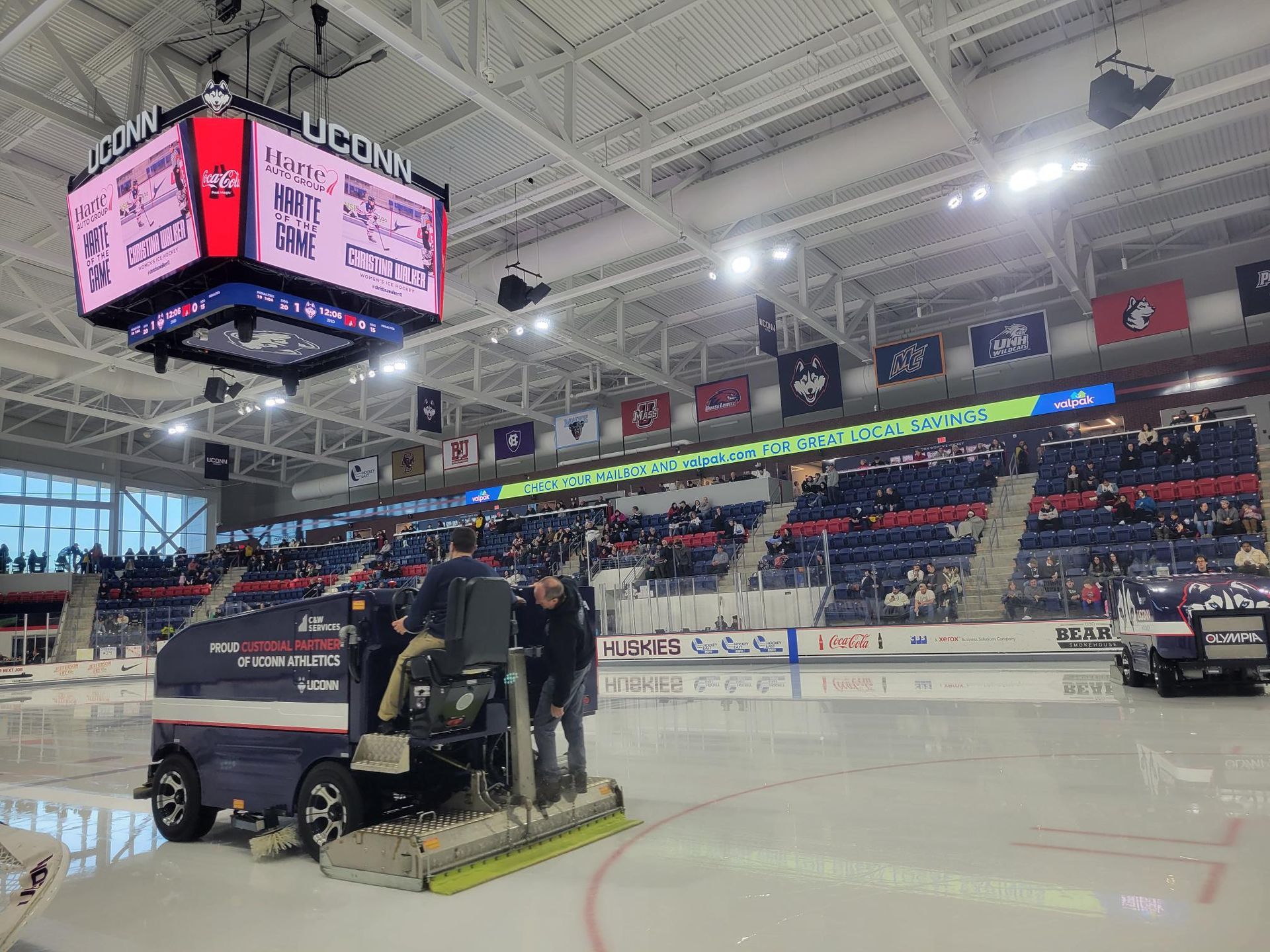
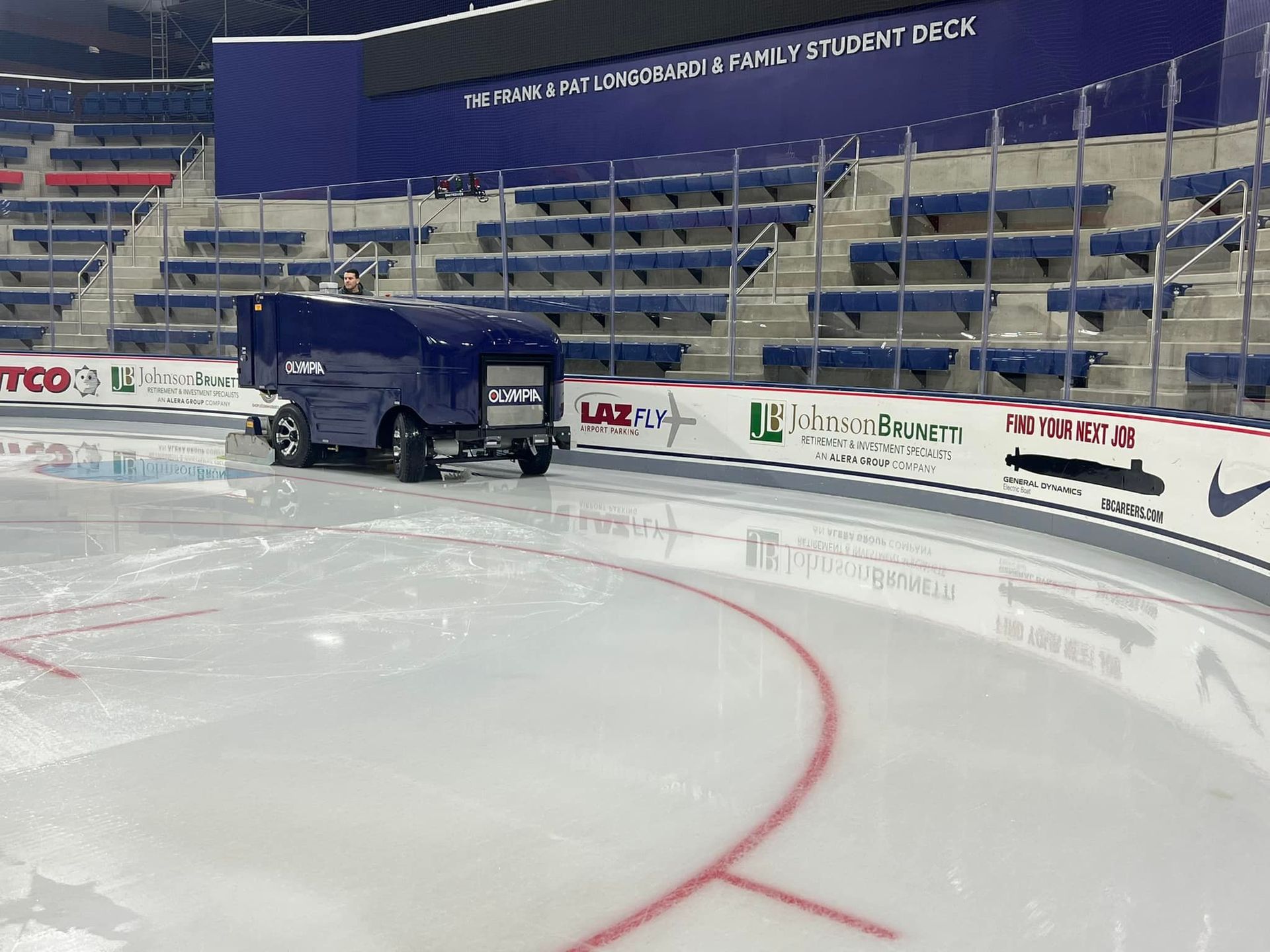
Selecting an ice resurfacer is one of the most consequential equipment decisions a rink can make. The resurfacer directly affects ice quality, scheduling reliability, staff efficiency, and long-term operating costs. For many facilities, the core decision comes down to whether a new or refurbished ice resurfacer is the better fit. While the choice often appears to hinge on budget alone, the true answer depends on a combination of operational demands, risk tolerance, and long-term planning.
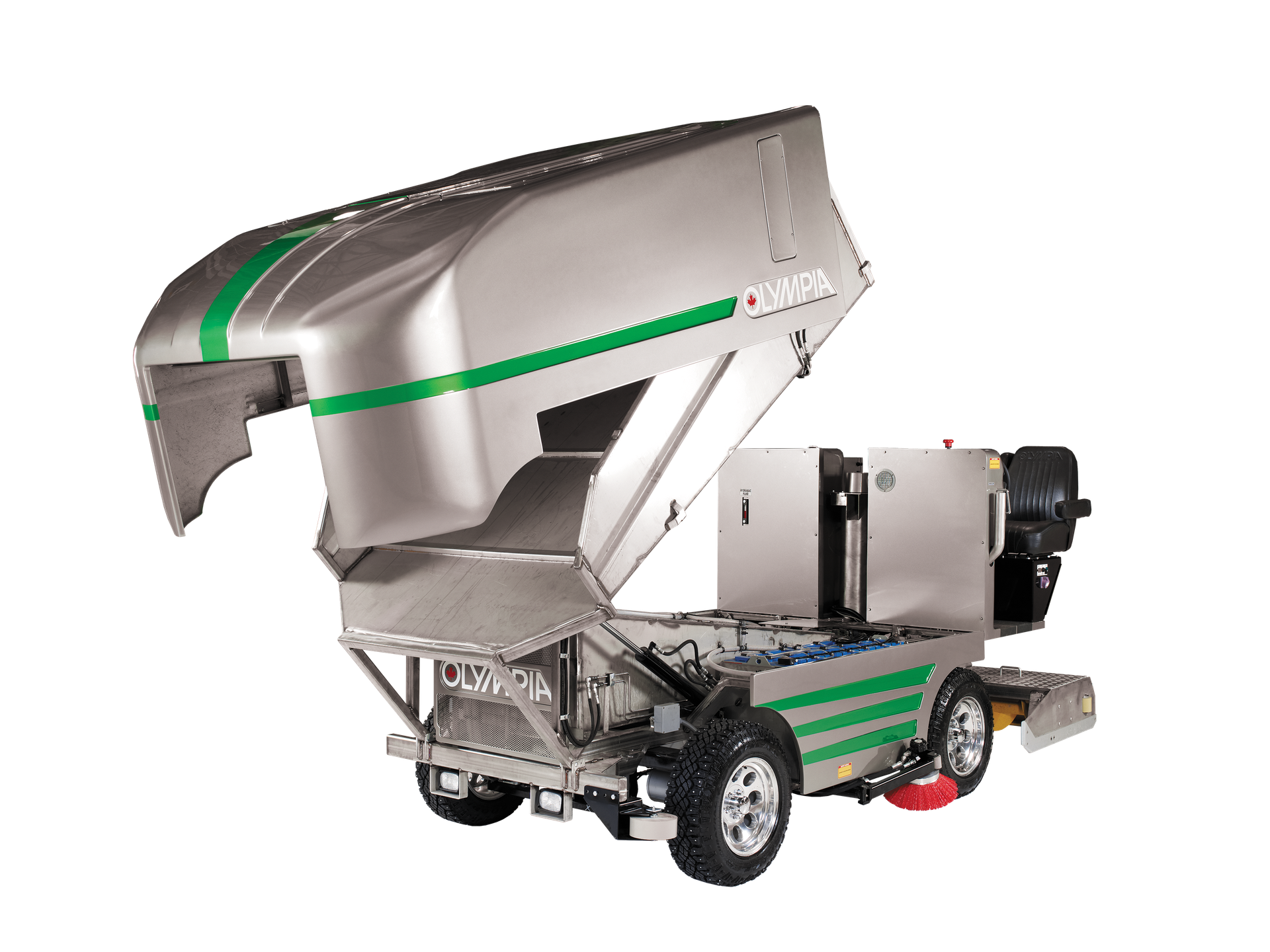
A new ice resurfacer represents the highest upfront investment, but it also delivers the highest level of predictability. New machines are built to current manufacturing standards, incorporate the latest engineering refinements, and typically include full factory warranty coverage. For rinks operating on tight schedules with limited tolerance for downtime, this predictability has significant value. New machines are less likely to experience unexpected failures during their early years, provided they are maintained according to manufacturer recommendations.
In addition to reliability, new resurfacers often include updated safety features, improved ergonomics, and more efficient systems. Controls may be more intuitive for operators, visibility may be improved, and maintenance access is often better designed. These incremental improvements do not always show up in cost comparisons, but they can reduce operator fatigue, training time, and minor errors that contribute to wear.
However, new equipment also carries disadvantages. The most obvious is cost. The purchase price of a new ice resurfacer can be challenging for community rinks, schools, or privately owned facilities with limited capital reserves. Financing options may reduce the immediate burden, but interest costs increase total ownership expense over time. New machines also experience the steepest depreciation during their first years, meaning a significant portion of their value is lost relatively quickly.
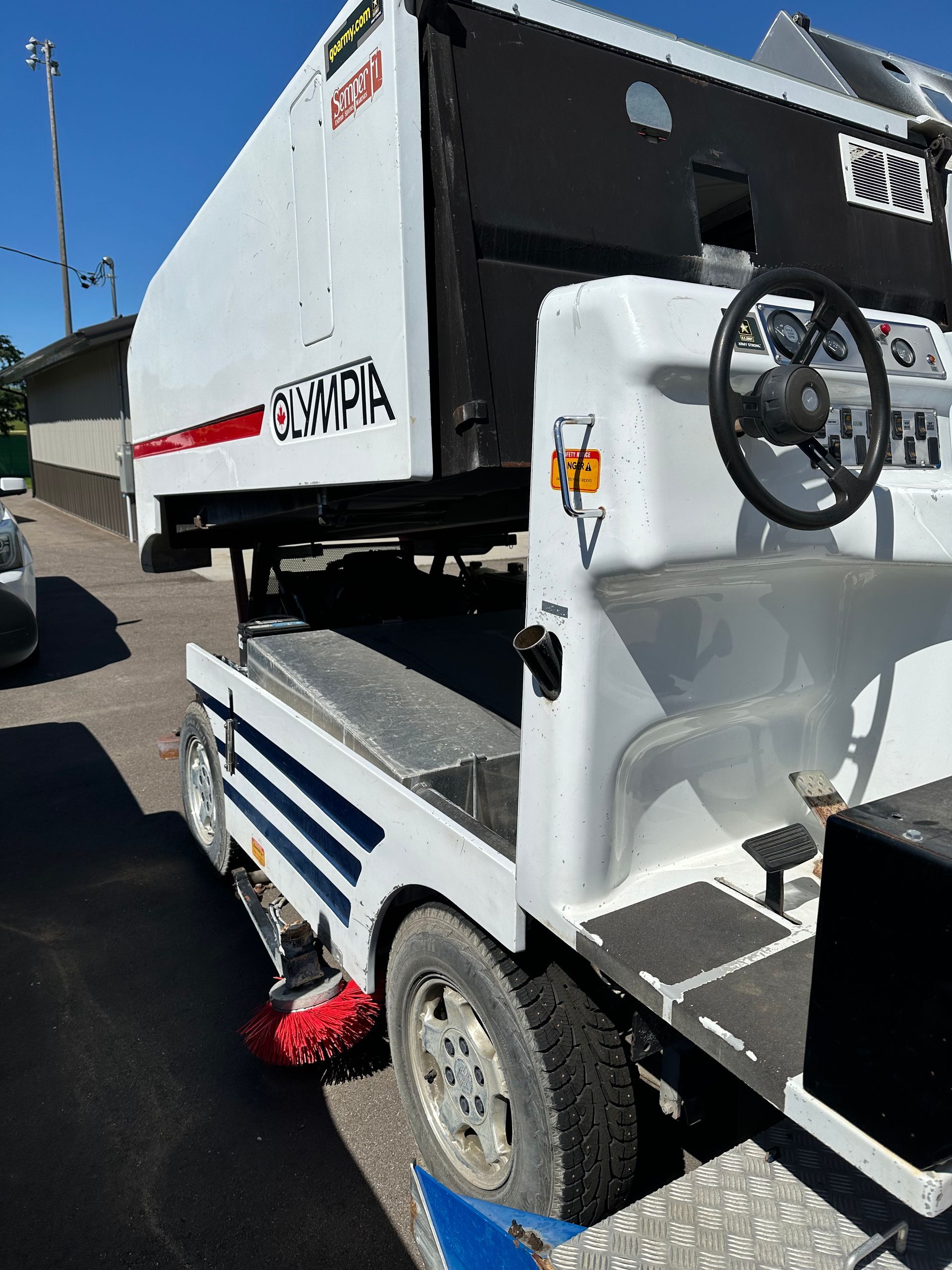
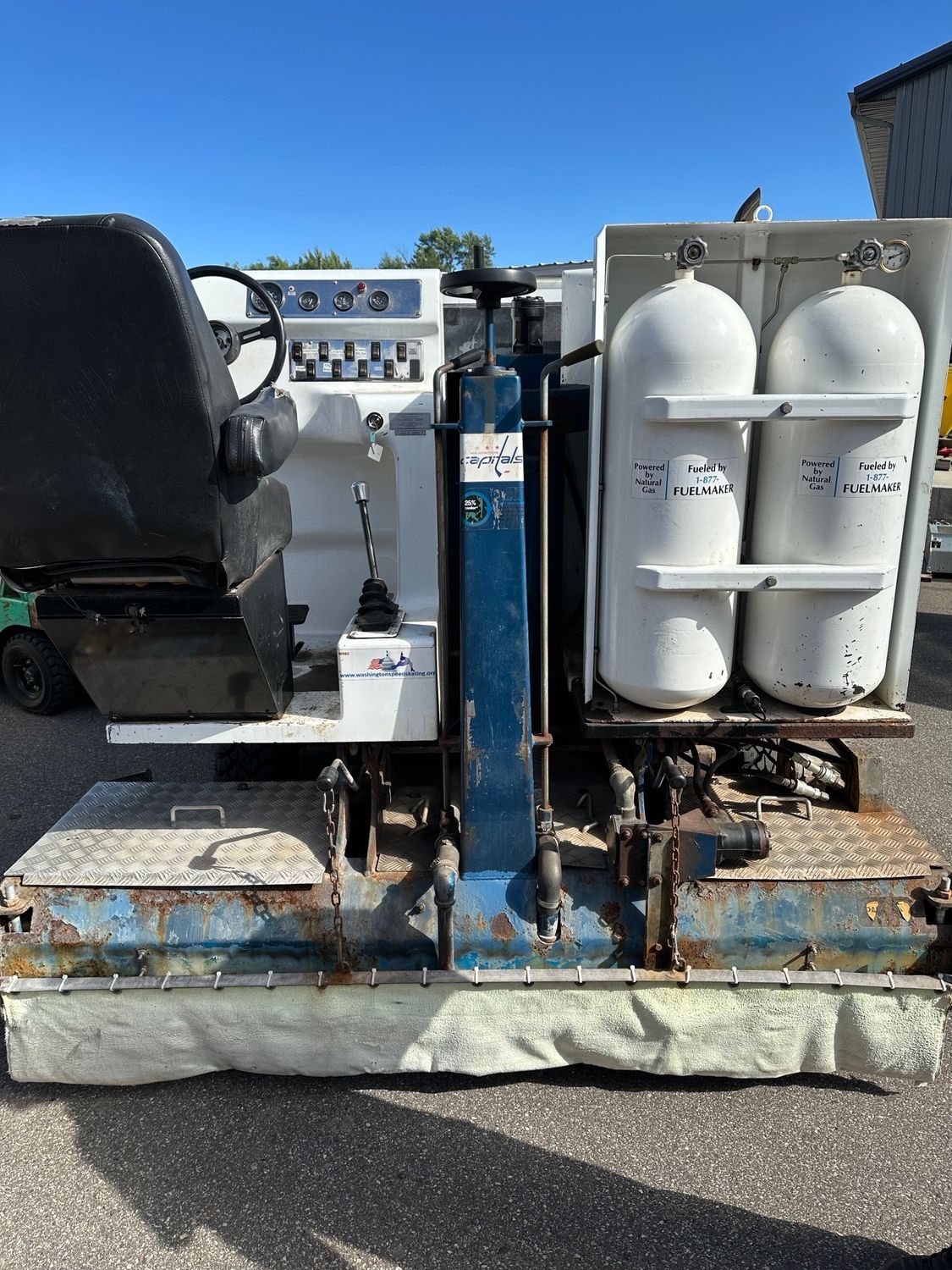
Refurbished ice resurfacers offer an alternative that balances cost and reliability when selected carefully. A properly refurbished machine is not simply an older unit that has been cleaned and resold. True refurbishment involves systematic inspection, replacement of worn components, servicing of hydraulic and mechanical systems, and verification that the machine operates within acceptable performance parameters. When performed by an experienced and reputable provider, refurbishment can restore a machine to dependable working condition for many years.
The primary advantage of a refurbished resurfacer is lower initial cost. Facilities can often acquire a refurbished unit for substantially less than a new one, preserving budget for other needs such as refrigeration upgrades, building maintenance, or staffing. For rinks with moderate usage or seasonal operations, this reduced capital commitment can make a refurbished machine an attractive choice.
Refurbished machines also tend to depreciate more slowly than new ones. Because much of the initial value loss has already occurred, the difference between purchase price and eventual resale value may be smaller. This can be beneficial for facilities that plan to replace or upgrade equipment within a shorter timeframe.
That said, not all refurbished resurfacers are equal. The quality of refurbishment varies widely depending on who performed the work and how thorough the process was. A machine refurbished with original manufacturer parts, documented service procedures, and testing provides far greater confidence than one that received only superficial repairs. Facilities considering refurbished equipment should evaluate service records, understand what components were replaced, and clarify what level of warranty or support is included.
Technology is another area where differences emerge. New resurfacers may offer diagnostic capabilities, efficiency improvements, or compatibility with newer systems that older machines cannot support. For rinks interested in data tracking, energy efficiency initiatives, or updated operator interfaces, these differences may matter. In contrast, refurbished machines often rely on proven, simpler systems that may be easier to service but lack newer features.
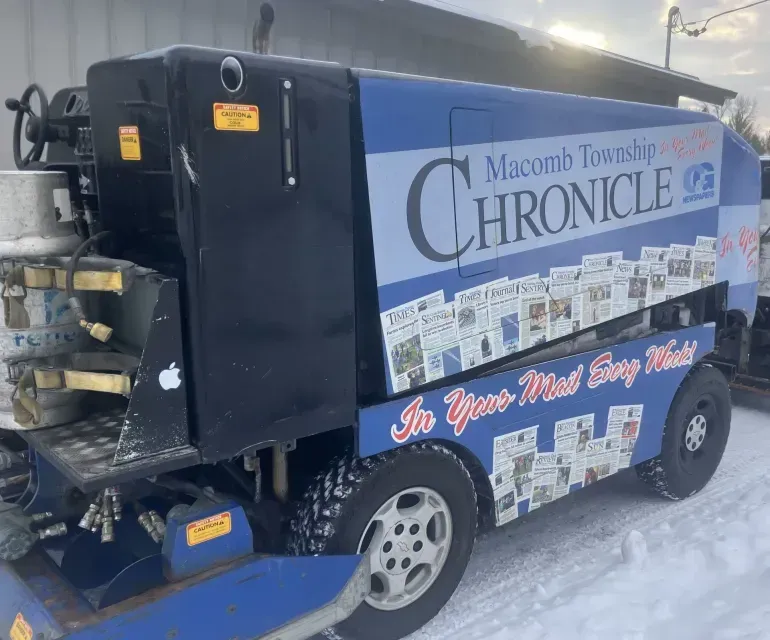
Used ice resurfacers sold without refurbishment represent a separate category and should be evaluated with caution. While their purchase prices can be extremely low, they often come with significant uncertainty. Without a documented service history or professional inspection, buyers may inherit problems such as worn hydraulic systems, outdated electrical components, or structural fatigue. Repairs on these machines can quickly erase any initial savings and lead to frequent downtime.
From a long-term cost perspective, the difference between new and refurbished machines is often smaller than expected. A new resurfacer may cost more initially but require fewer repairs early on. A refurbished resurfacer may require more frequent service but cost less upfront. Over a ten-year period, total ownership costs can converge, especially when maintenance is handled proactively. This makes it critical to look beyond purchase price and consider fuel or energy costs, maintenance frequency, parts availability, and downtime risk.
Usage intensity is one of the most important factors in deciding which option makes more sense. High-use facilities resurfacing ice multiple times per day benefit from the reliability and predictability of new machines. Lower-use or seasonal rinks may find that a refurbished machine meets their needs without unnecessary expense. Matching equipment capability to actual demand is more effective than choosing based solely on budget constraints.
Staff experience also plays a role. Facilities with experienced operators and maintenance staff may feel more confident managing a refurbished machine and addressing minor issues before they escalate. Rinks with limited technical support may prefer the stability of a new machine with full warranty coverage and standardized service support.
Resale considerations should not be overlooked. New machines generally command higher resale values if maintained and documented properly. Refurbished machines can also retain value, particularly if service records are complete and the machine remains in good condition. In both cases, consistent maintenance documentation improves resale prospects and reduces buyer hesitation.
Financing options differ between new and refurbished equipment as well. New machines often qualify for structured financing programs, while refurbished units may require different arrangements. Facilities should evaluate how financing terms affect long-term budgets and cash flow stability.
Risk tolerance ultimately determines the best choice. New machines minimize early operational risk but require greater upfront commitment. Refurbished machines reduce capital exposure but demand careful selection and ongoing attention. Neither option is inherently better; each aligns with different operational realities.
The most successful equipment decisions are made through structured evaluation. Facilities should assess daily usage, peak demand periods, staff capabilities, budget flexibility, and long-term goals. Reviewing service histories, understanding warranty coverage, and considering total ownership cost provide clarity. Decisions based on these factors tend to produce better outcomes than those based on initial price alone.
When chosen thoughtfully and maintained consistently, both new and refurbished ice resurfacers can support reliable operations for many years. The key is aligning the machine with how the rink actually operates and committing to disciplined maintenance. Facilities that take this approach gain not only dependable equipment, but also greater control over costs, scheduling, and long-term planning.